

For professionals in the Indian power-generating sector, a breakdown voltage tester connotes electrical stability. For the technical personnel engaged in the power-generating sector, understanding the operation principle and efficient use of these testers are critical to ensuring the resilience of electrical infrastructure. This article is meant to provide a comprehensive overview of how these testers operate, their role in preventive maintenance, and their impact on the lifespan of electrical components. We are going to explore the specifications that make these testers suitable for diverse climatic conditions of India and the way they align with international standards.
What is breakdown voltage of transformer oil?
Understanding the breakdown voltage of transformer oil is fundamental to assessing the response of electrical insulation to electrical stress. In essence, breakdown voltage is the minimum voltage at which a dielectric material, such as transformer oil, loses its insulating properties and allows an electrical discharge to occur. This phenomenon is critical, as it represents the point of insulating material degradation and may lead to catastrophic failures in power equipment as far as transformer oil is concerned.
In India, where transformers are exposed to diverse environmental and operational conditions, monitoring the breakdown voltage of transformer oil is crucial, being a matter of technical importance as well as a safety concern. Breakdown voltage is indicative of oil purity, moisture content, and overall quality. Higher values of breakdown voltage indicate better insulating properties, meaning that the oil can effectively insulate the transformer’s internal components, thus preventing electrical arcing or short-circuiting that could lead to equipment damage or power outages.
Measuring the breakdown voltage of transformer oil involves the gradual increase of voltage applied to an oil sample until an electrical breakdown is observed. This process helps you evaluate the current condition of oil, as well as serves as a predictive maintenance tool. Testing the transformer oil with the use of a breakdown voltage tester, the technicians in India’s power-generating sector can predict potential failures and perform the necessary maintenance, thereby avoiding costly downtime and improving the overall efficiency of the power grid.

Differences between breakdown voltage and dielectric strength
It’s important to distinguish between breakdown voltage and dielectric strength, because even though these terms are related, they are not synonymous.
Breakdown Voltage: this term denotes the precise voltage level, at which an insulating substance, such as mineral oil, ceases to be an insulator and begins to conduct electricity, leading to an electrical failure. In the context of transformer oil, it represents the threshold, beyond which the oil fails to inhibit the passage of electric current between the electrodes dipped therein. Breakdown voltage serves as a crucial measure of transformer oil’s condition and ability to function as an insulator.
Dielectric Strength: by contrast, dielectric strength is defined as the highest electric field level that an insulating material can inherently resist before succumbing to an electrical failure. This measure reflects the electrical resistance of the material relative to its thickness. Expressed in kilovolts per millimeter (kV/mm), dielectric strength is an essential consideration in the development and evaluation of electrical apparatus. It informs of the minimum thickness necessary for insulation materials to effectively withstand the specified voltage levels.
While breakdown voltage provides a practical evaluation of the actual condition of transformer oil, dielectric strength is more about the inherent capabilities of the insulating material. Both parameters are crucial to designing safe and efficient electrical systems.
Breakdown voltage testers in India by GlobeCore
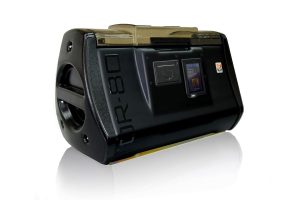
GlobeCore has introduced a range of breakdown voltage testers in India, specifically designed to meet the demanding requirements of the power-generating sector. The TOR-80, TOR-80A, TOR-100, and TOR-100A models are distinguished by their precision and reliability.
The TOR-80 and TOR-100 testers are engineered to determine the electrical breakdown voltage of transformer oil and other liquid dielectrics. They comply with international standards, such as IEC 60156, ASTM D877, and ASTM D1816, making them versatile for various applications. The TOR-80 and TOR-100 series are distinguished by their capability to perform automated and accurate measurements of breakdown voltage up to 80 kV and 100 kV, respectively.
The core technology embedded in these testers comprises a high-voltage transformer combined with electronic modules. The unit operates with the voltage gradually increased on the secondary winding of the transformer. The process continues until there occurs a breakdown in the liquid dielectric, which is carefully measured and recorded.
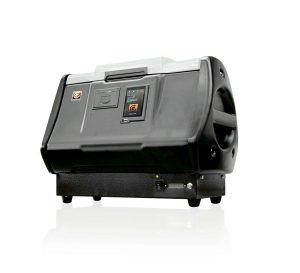
The TOR-80A and TOR-100A versions are almost identical to their equivalents, but offer an additional feature — an internal rechargeable battery, allowing for offline operation. This is particularly useful for on-site testing in remote locations across India, where power sources may not be readily available.

Advantages of GlobeCore breakdown voltage testers
GlobeCore breakdown voltage testers, in particular the TOR-80, TOR-80A, TOR-100, and TOR-100A models, are popular in the Indian market owing to their exceptional features and advantages tailored to the power-generating sector needs. The advantages these instruments offer are described below:
- Automated and accurate measurements: these testers are designed for automated operation, ensuring consistent and accurate breakdown voltage measurements. This accuracy is crucial to the applications, where even minor deviations may lead to serious consequences. For example, the TOR-100 tester can measure breakdown voltages up to 100 kV, while the TOR-80 tester measures up to 80 kV, allowing for a wide range of testing scenarios.
- Instantaneous voltage shutoff: having detected a breakdown, these testers can shut off the test voltage in a matter of 4 microseconds. This feature is crucial to protecting both the equipment and the operator from high voltage breakdown hazards.
- Integrated printer and data connectivity: equipped with an integrated printer and USB connectivity, these testers ensure immediate logging of test results and easy transfer of data. This functionality is particularly beneficial in maintaining accurate and comprehensive records for quality control and regulatory compliance in the Indian power-generating sector.
- Ease of operation and maintenance: designed with user-friendliness in mind, these testers are easy to operate and maintain. This is essential in a country like India, where the equipment is required to be accessible and manageable by a broad range of technical personnel with various levels of expertise.
- On-battery operation for remote testing (TOR-80A and TOR-100A): a rechargeable battery included in TOR-80A and TOR-100A models extends their functionality to remote locations, which represent a common scenario in India’s vast and diverse landscape. This feature enables on-site testing of transformer oils, which is crucial to timely maintenance and troubleshooting.
In a country with the power-generating sector rapidly expanded and modernized, the ability to accurately and efficiently test the breakdown voltage of transformer oils is indispensable. The TOR-80, TOR-80A, TOR-100, and TOR-100A models by GlobeCore play a critical part in ensuring that the country’s energy infrastructure remains robust and capable of meeting the demanding requirements of its economy and the growing needs of its population.
 Breakdown Voltage Tester ...
 Breakdown Voltage Tester ...
 Transformer Oils Breakdown ...